100ml shortfill with nicotine, which route wins?
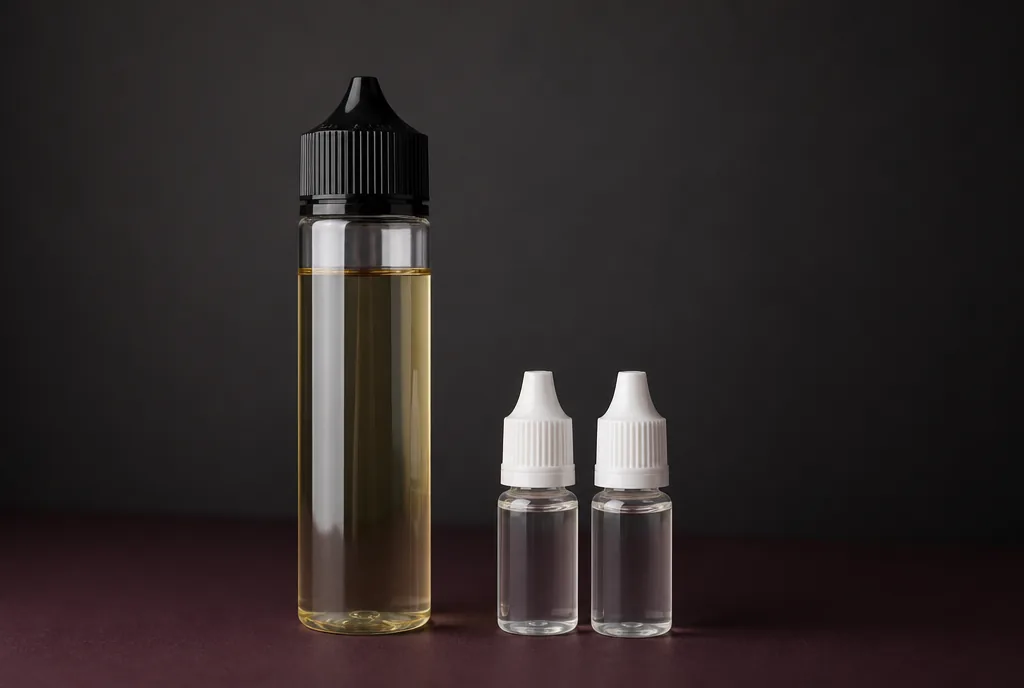
Look for a large bottle of e-liquid with nicotine in it and every result turns out to be the same product, a 100ml shortfill sold at 0 mg with empty space at the top. Three routes still lead to a nicotine liquid (the 10 ml bottle, the 50 ml shortfill and the 100 ml shortfill), and they do not deliver the same strength, the same flavour or the same number of bottles to open. This piece sets them side by side.
Why a 100ml shortfill never arrives with nicotine in it
UK law caps any nicotine containing e-liquid at 10 ml per refill container and at 20 mg/ml in strength. Those limits sit in the Tobacco and Related Products Regulations 2016, which also restrict tanks to 2 ml. Anything larger has to be sold nicotine free.
A 100ml shortfill therefore becomes a nicotine liquid at home. Most arrive in a 120 ml bottle, and the standard nic shot is a 10 ml bottle at 18 mg/ml. One shot gives 110 ml at 1.64 mg/ml, while two shots give 120 ml at exactly 3 mg/ml.
Three ways to end up with a nicotine liquid
All three routes start from the same legal ceiling, but they split nicotine, flavour and preparation differently. Both shortfill routes also mean pouring concentrated nicotine yourself, so work with the bottle standing on a clean surface and wipe up any drip straight away.
The 10 ml nicotine bottle
It arrives at the strength set by its maker, up to 20 mg/ml. There is no arithmetic, no shot to pour, and the strength matches the label. Its limit is volume, since 120 ml of liquid means twelve bottles to open.
The 50 ml shortfill with nic shots
Sold at 0 mg in a bottle with headroom, it gives 60 ml at 3 mg/ml with one 18 mg shot and 70 ml at 5.14 mg/ml with two, provided the bottle takes the extra 20 ml. It is the more flexible of the two shortfills when it comes to strength.
The 100 ml shortfill with nic shots
It usually comes in a 120 ml bottle, which leaves room for two shots and no more. One shot gives 110 ml at 1.64 mg/ml, two give 120 ml at 3 mg/ml. No route yields more liquid per bottle opened, and none tops out lower.
The three routes side by side
Figures assume standard 10 ml shots at 18 mg/ml. The flavour line shows how much of the original concentration survives once the nicotine is in.
| Criterion | 10 ml nicotine bottle | 50 ml shortfill + shots | 100 ml shortfill + shots |
|---|---|---|---|
| Nicotine in the bottle you buy | Up to 20 mg/ml | 0 mg | 0 mg |
| With 1 shot | Not applicable | 60 ml at 3 mg/ml | 110 ml at 1.64 mg/ml |
| With 2 shots | Not applicable | 70 ml at 5.14 mg/ml | 120 ml at 3 mg/ml |
| Original flavour left at 3 mg/ml | Not applicable | 83.3% | 83.3% |
| Highest strength in the original bottle | 20 mg/ml | 5.14 mg/ml (with 20 ml headroom) | 3 mg/ml |
| Bottles opened for 120 ml at 3 mg/ml | 12 | 4 | 3 |
| Concentrated nicotine to handle | No | Yes | Yes |
The row that surprises is the fourth. A 50 ml shortfill with one shot and a 100 ml shortfill with two land on exactly the same point, 3 mg/ml and 83.3% of the original flavour, because the ratio of shot to liquid is identical, one to five.
The bigger bottle does not dilute the recipe any further than the smaller one. It simply doubles what you mix in one go.
Real strength in a 100ml shortfill by number of shots
The sum fits on one line. Multiply the number of shots by 180 mg of nicotine (10 ml at 18 mg/ml), then divide by the final volume, shortfill and shots included. Dividing by 100 ml instead is the classic mistake, and it overstates the result by 10% with one shot and by 20% with two.
| Shots added | Final volume | Strength | Original flavour left |
|---|---|---|---|
| 1 | 110 ml | 1.64 mg/ml | 90.9% |
| 2 | 120 ml | 3.00 mg/ml | 83.3% |
| 3 | 130 ml | 4.15 mg/ml | 76.9% |
| 4 | 140 ml | 5.14 mg/ml | 71.4% |
| 5 | 150 ml | 6.00 mg/ml | 66.7% |
The last three rows will not fit in a 120 ml bottle. They need a second empty bottle, and they dilute the recipe beyond what its maker planned for. Evapo, a UK retailer, advises against going above 6 mg/ml in a shortfill for that very reason, and the table shows why, since a third of the flavour has gone by then.
Shot strength changes the sums too. The legal ceiling is 20 mg/ml, and two shots at that strength would give 3.33 mg/ml rather than 3, so check the figure printed on the shot before trusting a round number.
What shots do to the ratio and the flavour
A shot brings its own base as well as nicotine, and UK shots are sold in more than one ratio, with 50/50 versions on sale next to 70/30 VG/PG ones such as Vampire Vape’s NicIt Up. Poured into a bottle with a different ratio, a shot shifts the balance printed on the label.
Take a 100 ml shortfill sold at 70/30 VG/PG and add two 50/50 shots. The shortfill holds 70 ml of glycerine, the shots add 10 ml, so the final 120 ml carries 80 ml of it and lands at 67/33. Shots matched to the shortfill’s ratio cancel that shift, a mechanism our head to head on the PG VG ratio works through in detail.
On flavour, dilution is what counts. One shot brings the recipe down to 90.9% of its original concentration, two shots to 83.3%, and each extra shot takes it further from the balance it was built around.
The verdict by vaper profile
The right route depends first on the strength you want, and the ranking changes completely between 2 and 12 mg/ml.
For a mouth to lung vaper on a pod or a tight tank who wants more than 6 mg/ml, the 10 ml bottle wins outright. No shortfill reaches that level without heavily diluting the recipe.
For a sub-ohm vaper at 3 mg/ml or below, the 100 ml shortfill with two shots wins. It delivers 120 ml at exactly 3 mg/ml in a single mix, with the same dilution as the 50 ml route.
Between 5 and 6 mg/ml in a large format, the 50 ml shortfill with two shots takes it, provided the bottle holds 70 ml.
For control over flavour, base and nicotine at once, home mixing opens a fourth route, covered in our look at the arom et liquide formats.
FAQ
Questions about shot shortfills tend to go beyond the strength sums. These are the five that come up most, each with a short answer.
Can I add a nic shot to any e-liquid?
No. A shot goes into a liquid sold at 0 mg and built to take it, with extra flavour and a bottle that keeps headroom. A 10 ml nicotine bottle has neither the space nor the flavour margin to absorb one.
What if the bottle has no room for the second shot?
Pour half of the liquid into a clean empty bottle, then add one shot to each half. Two 50 ml halves with a shot each end up exactly where two shots in the full bottle would, at 3 mg/ml.
Do I need to let a shortfill rest after adding shots?
It is not essential. A well shaken mix is usable quickly, though a few hours of rest help the liquid settle evenly before you fill the tank.
Can I vape a 100 ml shortfill without adding a shot?
Yes, it can be vaped as it is at 0 mg. Because the recipe is often dosed high to absorb one or two shots, it may taste stronger than intended, which 10 to 20 ml of unflavoured nicotine free base will correct.
Will a 100 ml shortfill work in a pod kit?
Only if its ratio suits the coil. Most 100 ml shortfills are high VG and built for sub-ohm kits, although 50/50 versions aimed at mouth to lung kits are becoming easier to find. Check the ratio on the label against what your coil accepts.
Choosing a 100ml shortfill with your eyes open
A 100ml shortfill only becomes a nicotine liquid once you mix it. Its natural territory is low strength, 1.64 or 3 mg/ml in the original bottle, and on that ground it beats the 50 ml route on preparation and on bottles opened.
Before ordering, check the real capacity of the bottle, the ratio of your shots against the shortfill’s, and the exact strength once the final volume is counted. Those three points decide whether a 100ml shortfill is a sensible choice or a diluted recipe, and the same grid works for any large format, including the Koncept bottle covered in our piece on Heisenberg e-liquid.
Editorial content for adult readers only. This article is not a buying recommendation. Nicotine is a highly addictive substance, and nicotine vaping products are not for sale to anyone under 18 in the UK.
Further reading
 01 Verdicts
 Caramel e-liquid: which recipe wins?
Caramel e-liquid verdict: salted, tobacco and dessert families compared on ratio, format and nicotine across the British shelf, with a winner by use.Ragnarok e-liquid: which version wins?
Ragnarok e-liquid: the A&L Ultimate range set against its Green Edition, Primal and Legend versions on profile, format and dosing, with UK equivalents. 03 Value for money