Dragon fruit e-liquid: which one wins?
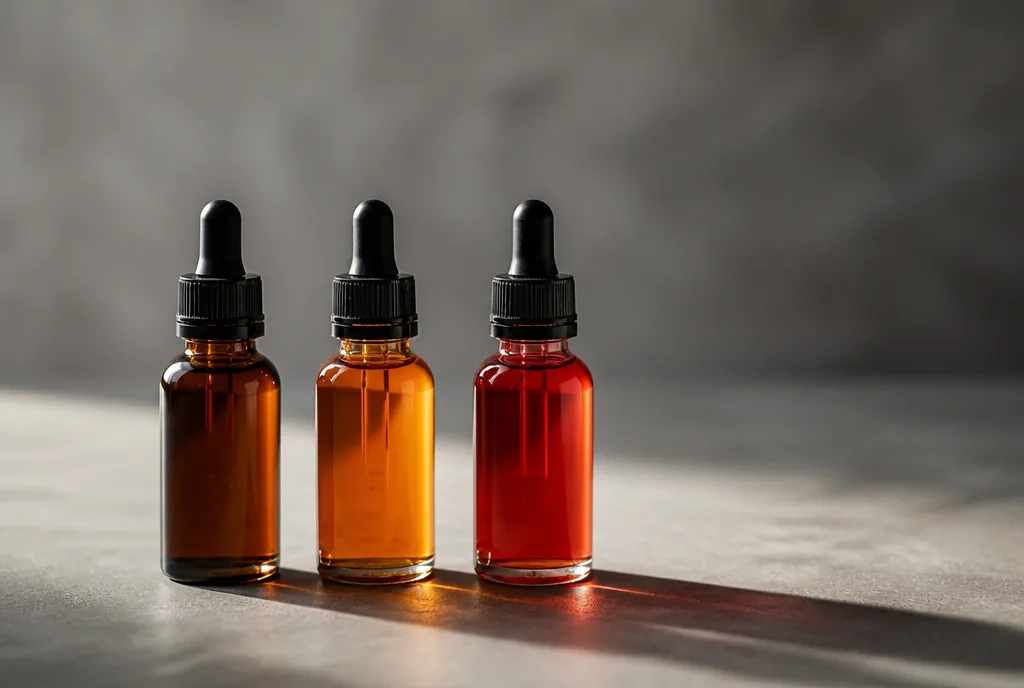
Under one name the British shelf offers bottles that share almost nothing: a 10 ml nic salt capped at 20 mg/ml, a 50 ml shortfill built for sub-ohm coils, and a concentrate you dilute yourself. Choosing a dragon fruit e-liquid therefore means choosing between three philosophies of bottle rather than three flavours. This head to head lines them up on verifiable criteria and names a winner for each use.
Dragon fruit e-liquid: which format suits which kit
On a pod or a small tank, a 10 ml nic salt is the safest choice here. It is the only format that arrives at a usable strength without any mixing, and the only one the regulations let a shop sell already nicotined.
On a sub-ohm atomiser, the 50 ml shortfill takes over. British ranges build those at 70/30 almost as a rule, which suits a low resistance coil and produces the vapour volume that kind of hardware exists for.
For a first taste of the profile, the 10 ml stays the sensible entry. Dragon fruit divides opinion far more than strawberry or apple, and 50 ml of a flavour you dislike is a long fifty millilitres.
Why this flavour is almost never sold on its own
Dragon fruit, also called pitaya, has a quiet taste in nature. British retailers describe it as reminiscent of kiwi without the acidity, or as sitting somewhere between a mellow pear and a fresh kiwi. That gentleness explains something easy to verify by scrolling any UK catalogue.
Almost nothing leaves it alone. The listings pair it with raspberry, with lemon and ice, with menthol, or with other tropical fruits. A recipe claiming pure dragon fruit is the exception rather than the norm, and that is your first sorting criterion.
The pairing also tells you what the maker expects of the flavour. A dragon fruit against raspberry is aiming at sweetness and body. A dragon fruit against lemon and ice is aiming at sharpness, and it will read as a completely different vape despite the shared headline fruit.
The three families of dragon fruit e-liquid on British shelves
The bottles in circulation fall into three clean families. Each answers a different constraint: nicotine, format, or the freedom to build the base yourself. Nothing on the shelf sits outside them.
Nic salt 10 ml is the volume ceiling for any nicotine containing bottle here, so this is where the strengths live. British ranges typically offer 0, 5, 10 and 20 mg/ml on a fruit profile of this kind, and blends such as dragonfruit with raspberry occupy most of that shelf.
The 50 ml shortfill is nicotine free with headroom for a shot. The best known example on this flavour is the Aisu dragonfruit by Zap! Juice, quoted at 70/30 VG/PG, which the same house also lists in an iced variant. Retailers stock it as a menthol leaning tropical rather than a plain fruit.
The concentrate is the third route, and the only one where you set the ratio. It costs you a steeping wait and a measuring session, and it buys you the ability to pair the pitaya with whatever acidic note you think it needs.
The comparison table
The characteristics below are those stated by manufacturers and British retailers. Prices are deliberately absent: they move too often to separate two bottles for long.
| Criterion | 10 ml nic salt | 50 ml shortfill | Concentrate |
|---|---|---|---|
| Volume | 10 ml | 50 ml, 60 ml once shot | 10 ml or 30 ml |
| Stated ratio | Usually 50/50 | Usually 70/30 | Set by you |
| Nicotine | 0 to 20 mg/ml | None, add a shot | None |
| Common pairing | Raspberry, lemon, ice | Ice, tropical fruits | Your choice |
| Preparation | None | One nic shot | Dilute and steep |
| Target hardware | Pod, MTL tank | Sub-ohm | Any |
| Availability | Wide | Wide | Specialist |
Read down the columns and one point stands out. Volume is the most discriminating criterion here, well ahead of flavour. Between a 10 ml and a shot 50 ml the ratio is one to six, while the stated profiles stay neighbours.
What the missing French formats tell you
Continental catalogues list this flavour in 200 ml bottles and in bases built without propylene glycol, using propanediol sold as Végétol. Neither reaches a British shelf in any meaningful way, and it would be dishonest to compare them as if they did.
The reason is regulatory rather than commercial. Nicotine free liquid can legally be sold in large bottles here, but the shortfill convention settled the market at 50 ml and 100 ml, and the trade built its nic shot arithmetic around exactly those sizes.
The propylene glycol free route does exist in Britain, just under a different name. Retailers list 100 percent VG shortfills with PG free flavourings as a category of their own, which is the nearest equivalent to what a French shopper would call a Végétol bottle. What a base swap does to a light fruit is set out in our head to head on the PG VG ratio.
Verdict: the bottle that wins by profile
None of the three families wins across the board. The ranking depends on three plain questions: do you want nicotine, what hardware do you use, and how many millilitres do you get through in a week.
Trying the profile: the 10 ml wins without argument. It is the only format that lets you be wrong for very little, and it spares you 50 ml of something that did not suit you.
Daily pod use: the 10 ml nic salt wins again, this time on the strengths. Up to the 20 mg/ml ceiling it covers the whole range a pod user is likely to want, with no mixing at all.
Daily sub-ohm use: the 50 ml shortfill wins on ratio and on volume. A 70/30 feeds a low resistance coil properly, and one shot brings the bottle to a workable strength.
Home mixing: the concentrate wins by default, because it is the only route that lets you decide both the pairing and the base. It is also the only one where a dragon fruit e-liquid can be built as a solo fruit rather than a duo.
Frequently asked questions
Are dragon fruit and pitaya the same thing?
Yes, they are two names for one fruit. Some catalogues file the two spellings separately, which means a keyword search can quietly miss half the listings.
Does dragon fruit work with a dessert flavour?
The pairing is rare on the shelf, because a pastry note covers the pitaya almost immediately. Home mixes work better against an acidic support than a sweet one.
Does this flavour stain a tank?
Pale tropical recipes mark tanks very little, unlike dark tobacco and dessert blends. Rapid browning in a clear bottle usually points to light exposure rather than the recipe.
Can I get this flavour as a concentrate?
Yes, several makers list dragon fruit as a concentrate to dilute, which lets you set the strength of the fruit and pair it yourself with something sharper.
Do iced and non-iced versions taste that different?
They do, and ranges often sell both. The iced version pushes the coolant forward and flattens some of the fruit, so read the product name closely before ordering.
What to remember before you order
A dragon fruit e-liquid is chosen first by format and base, then by recipe, because the stated profiles stay close from one brand to the next. The real gap sits between a 10 ml you use to test and a shot shortfill you commit a week to.
If you mix your own bottles, concentrates open far more combinations than anything ready made, as our look at the arom et liquide catalogue shows on a French range built almost entirely around that idea. And if intensity rather than subtlety is what you are after, the red fruit profiles covered in our piece on Ragnarok e-liquid sit at the opposite end of the same shelf, which is exactly why a dragon fruit e-liquid rewards a pairing rather than a solo run.
Editorial content for adult readers only. Vaping products usually contain nicotine, a substance that causes addiction. Not for sale to under-18s in the United Kingdom. This article is not a buying recommendation.
Further reading
 01 Head to head
 PG VG: 50/50 or 70/30, which one wins?
PG VG head to head: 50/50 against 70/30 on flavour, vapour and coil life, plus what a nic shot really does to the ratio printed on a UK shortfill. 02 Verdicts