Fruity Fuel e-liquid, which recipe wins?
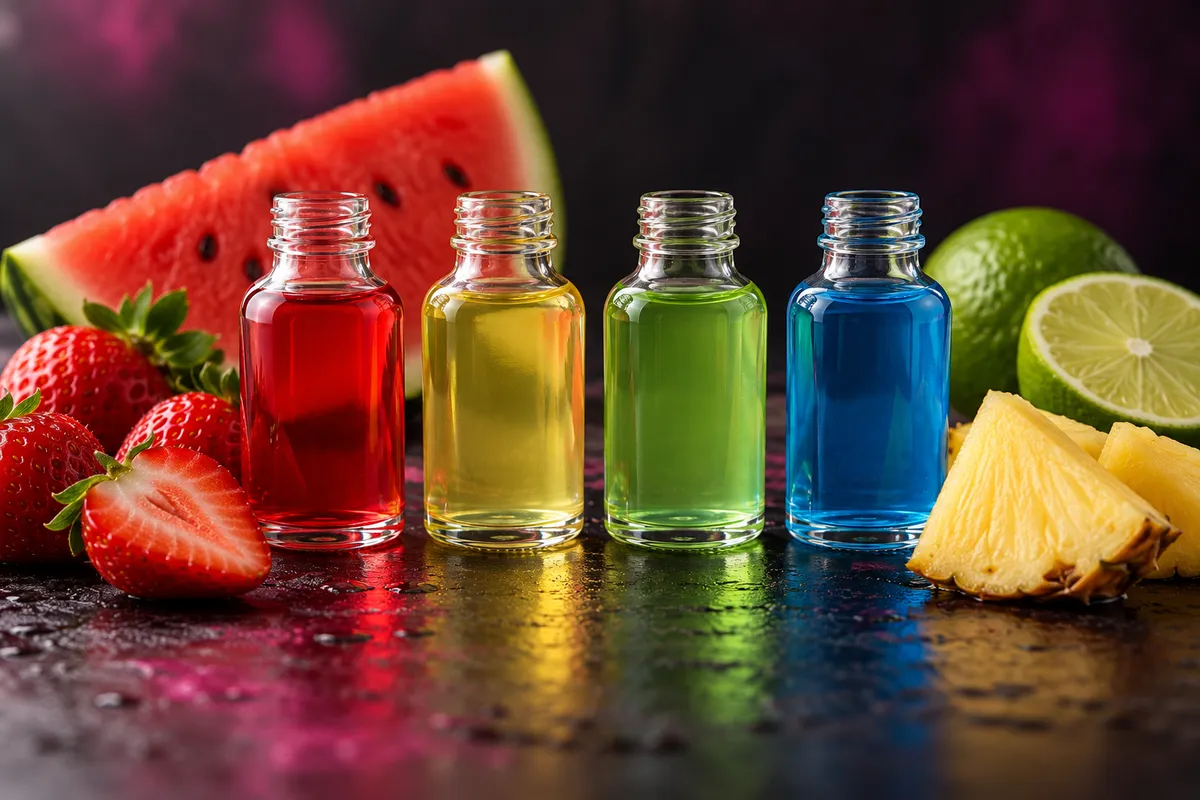
On a shop page, the Fruity Fuel range looks like a row of near identical bottles, Red Oil, Blue Oil, White Oil, Green Oil, told apart mainly by the colour in the name. Retailer listings often give two words per recipe, so picking one can feel like a coin toss. This verdict compares the recipes of this Maison Fuel line on three criteria, flavour family, sharp or sweet character and format, then names the one that comes out on top for each type of vaper.
Fruity Fuel in short, the recipe that wins for each profile
For red berry fans, The Red Oil wins. Its strawberry and pomegranate pairing is the clearest recipe in the line, with nothing added on top to pull it elsewhere. On the sharp side, The White Oil takes it with a lemonade built on lemon and lime, the most direct of the citrus options.
Anyone after a juicy fruit without a marked sour edge will lean towards The Wooky Oil, kiwi and watermelon. The other recipes are variations on these three poles, each with one extra layer (watermelon, a sweeter note, blue raspberry) that changes the character of the bottle.
What the Fruity Fuel range actually sells
Before comparing recipes, it helps to know what is in the box. Listings from several retailers agree on the essentials, and it is the format that decides which kit the liquid suits.
A 100 ml shortfill at 30/70, with no nicotine
Fruity Fuel is a line from Maison Fuel, a French manufacturer, and its e-liquids are made in France. The main format is a 120 ml bottle holding 100 ml of liquid at 0 mg, blended at 30 per cent propylene glycol (PG) and 70 per cent vegetable glycerine (VG), according to product listings from several retailers.
A VG-heavy ratio like this is aimed at direct lung setups and coils below 1 ohm. In a mouth to lung pod, it can struggle to soak into the wick, a trade-off our head to head on the PG VG ratio works through in detail.
Be wary of range descriptions, which do not all say the same thing. One of them announces a “universal” 50/50 on the very page where the bottle listings state 30/70. Only the label on the bottle you buy settles it.
The 30 ml concentrate for home mixing
The same recipes exist as 30 ml flavour concentrates, to be diluted in a base. The recommended dose is not the same from one listing to the next, 10 per cent at one retailer (15 per cent in a 100 per cent VG base), 6 to 9 per cent at another.
Fruity Fuel recipes head to head, family by family
The descriptions below repeat the flavours listed by at least two retailers. The recipes fall into four families, and the real choice is made inside each one. The Pink Oil, a bubblegum and melon recipe, leans towards sweets and is left out of this comparison.
Citrus, The White Oil against The Green Oil
Lemonade, lemon and lime make up The White Oil. The Green Oil keeps the lemon and lime, then adds watermelon, a softer fruit than the citrus around it.
The verdict leans towards The White Oil for anyone who wants pure citrus, and towards The Green Oil for anyone who finds lemonade too sharp. A strawberry lemonade, The Diabolo Oil, offers a third route halfway between citrus and red fruit.
Red berries, The Red Oil, The Lovely Oil and The Purple Oil
Strawberry and pomegranate share The Red Oil. The Lovely Oil combines cherry with jostaberry, the fruit of a cross between blackcurrant and gooseberry, which pulls the recipe towards dark berries. As for The Purple Oil, it wraps red berries in a more pronounced sweet note.
This trio goes to The Red Oil, on clarity. Fans of dark berries will lean towards The Lovely Oil, and those who want a fruit profile that leans sweet rather than juicy towards The Purple Oil.
Melon and watermelon, The Blue Oil against The Wooky Oil
Melon and blue raspberry form The Blue Oil, a pairing listings describe as both sweet and tart. The Wooky Oil pairs kiwi with watermelon, two fruits full of juice.
In this duel, The Wooky Oil wins for anyone who wants a juicy fruit, and The Blue Oil for anyone who enjoys the contrast between soft melon and the tang of raspberry.
Tropical, The Yellow Oil on its own
Sweet pineapple sits at the centre of The Yellow Oil. It is the only tropical recipe among those covered here, so it has no direct rival. Its target is fans of ripe pineapple rather than green, tart fruit.
The Fruity Fuel recipes side by side
The table lists each recipe, its family, its stated flavours and the vaper it suits best. Prices are left out on purpose, since they vary too much from shop to shop to settle a choice between two bottles.
| Recipe | Family | Stated flavours | Best for |
|---|---|---|---|
| The Red Oil | Red berries | Strawberry, pomegranate | A clear red fruit |
| The Lovely Oil | Red berries | Cherry, jostaberry | Dark, tart berries |
| The Purple Oil | Red berries | Red berries, sweet note | A sweeter fruit |
| The White Oil | Citrus | Lemonade, lemon, lime | Sharp citrus |
| The Green Oil | Citrus | Lemon, lime, watermelon | Softer citrus |
| The Diabolo Oil | Citrus | Lemonade, strawberry | Between citrus and red fruit |
| The Blue Oil | Melon | Melon, blue raspberry | Sweet and tart contrast |
| The Wooky Oil | Melon | Kiwi, watermelon | Juicy fruit |
| The Yellow Oil | Tropical | Sweet pineapple | Ripe pineapple |
Fruity Fuel and nicotine, what shots change
In the UK, refill bottles containing nicotine are capped at 10 ml and at a strength of 20 mg/ml, so a 100 ml bottle can only be sold at 0 mg. Nicotine is added with 10 ml nic shots, and the free space in the 120 ml bottle takes two at most.
The sums are easy to redo. One shot at 20 mg/ml brings 200 mg of nicotine into 110 ml, giving 1.82 mg/ml. With two shots, 400 mg spread through 120 ml, giving 3.33 mg/ml, and the recipe then makes up only 100 ml out of 120, or 83 per cent of its original strength.
The ratio shifts as well. With a single 50/50 shot, the glycerine goes from 70 ml to 75 ml out of 110 ml, and the blend lands at 32/68. Other large formats follow the same logic, set out in our verdict on the 100ml shortfill.
For the concentrate, the gap between listed doses changes the final volume. One 30 ml bottle makes 300 ml of liquid at 10 per cent, 333 ml at 9 per cent and 500 ml at 6 per cent. Starting low and adjusting after steeping is the safer approach, as with the concentrates covered in our look at the arom et liquide formats.
FAQ
Questions about this range are mostly about the maker, the formats and adding nicotine. Here are the five most common, each with a short answer.
Are Fruity Fuel and Maison Fuel the same brand?
Fruity Fuel is a line from the French manufacturer Maison Fuel, which also runs other collections under different names, such as Fighter Fuel, Graham Fuel and Big Fuel. Some shops file the bottles under Fruity Fuel and others under Maison Fuel, which explains the two names.
Does Fruity Fuel come in 10 ml bottles?
Yes, for some recipes and at a handful of shops only. That smaller size can be sold with nicotine already in it, unlike the 100 ml, and its ratio may differ from the large bottle’s. Reading the listing for each product before ordering is the safest route.
Can a 100 ml Fruity Fuel bottle be vaped without a shot?
Yes. The liquid is sold at 0 mg and can be vaped as it is, with no nicotine. The free space in the bottle simply stays empty, and the recipe keeps its full flavour strength.
Should a mix made from the concentrate be left to steep?
The listings consulted give no set time. A fruit recipe usually settles faster than a dessert one, and a few days away from light are often enough before judging the dose.
How should an opened 100 ml bottle be stored?
Capped tightly, away from light and heat, and out of reach of anyone under 18. Once shots have been added, the liquid contains nicotine and deserves the same care as a 10 ml nicotine bottle.
Choosing a Fruity Fuel recipe with your eyes open
The Red Oil leads for red berries, The White Oil for citrus and The Wooky Oil for juicy fruit. The other recipes add a nuance to those three poles, to be picked depending on whether you want more sweetness, more sharpness or a darker berry.
Before ordering, check that your kit handles a 30/70 blend, redo the strength sum once shots are added and start low with the concentrate. Those three habits apply across the whole Fruity Fuel range, and the same grid works for comparing the other fruit e-liquids covered on this site.
Editorial content for adult readers only. This article is not a buying recommendation. Vaping products can contain nicotine, which is a highly addictive substance, and nicotine vaping products are not for sale to anyone under 18 in the UK.
Further reading
 01 Verdicts
100ml shortfill with nicotine, which route wins?
A 100ml shortfill is sold at 0 mg. Real strength by number of nic shots, final volume, ratio and dilution, set against 10 ml bottles and 50 ml shortfills. 02 Verdicts
Caramel e-liquid: which recipe wins?
Caramel e-liquid verdict: salted, tobacco and dessert families compared on ratio, format and nicotine across the British shelf, with a winner by use. 03 Head to head