VG PG base mix, premixed, home mixed or plant derived?
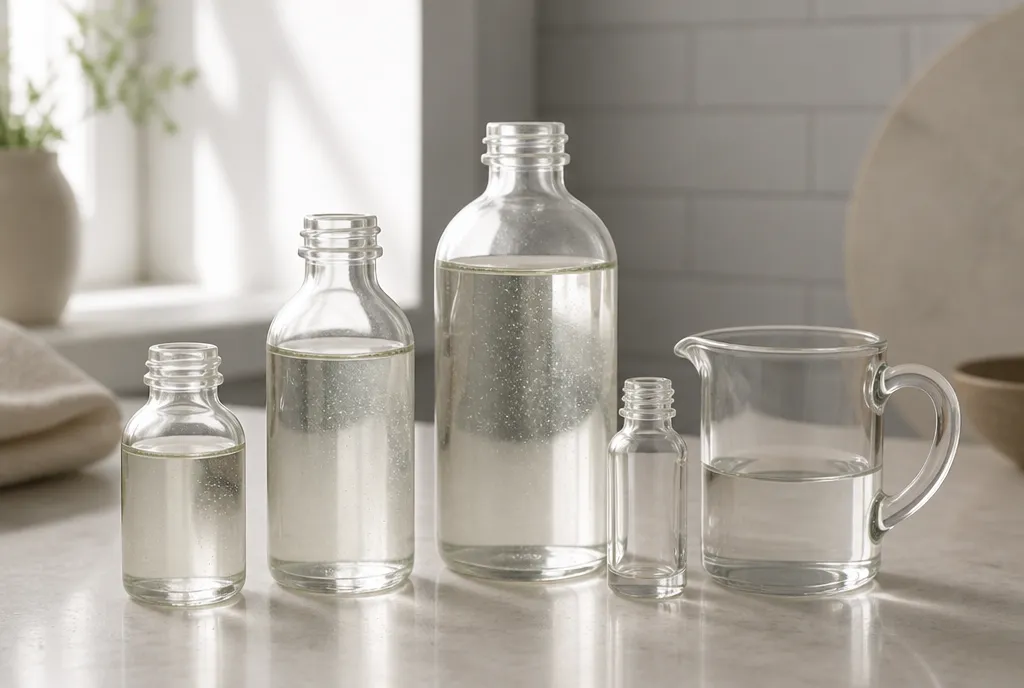
A VG PG base mix makes up most of any home-mixed e-liquid, around nine tenths of the bottle with a flavour dosed at 10 per cent. Yet the same word covers three quite different purchases, namely a premixed base sold ready in one bottle, separate bottles of vegetable glycerine and propylene glycol blended at home, and bases whose label claims a plant-derived PG. This head to head runs all three through five criteria (ease, ratio accuracy, freedom, ingredient origin, batch size) and names a winner for each profile.
VG PG base mix in short, the route that suits each mixer
A premixed base wins for most people who mix their own. The ratio is fixed by the maker, the bottle arrives at 0 mg, and nothing needs measuring apart from flavour and nicotine shots.
Blending straight VG and PG at home wins for experienced mixers who want a ratio nobody sells, or who keep changing it from one recipe to the next. A plant-derived label is not a third format. It is an option that sits on top of the other two, and it only matters to someone who wants to know where the PG came from.
The three routes to a VG PG base mix
All three start from the same two ingredients, vegetable glycerine (VG) and propylene glycol (PG), with no flavour and no nicotine. What separates them is who does the blending and what the label tells you about the ingredients.
The premixed base
This is the simplest form, one bottle of VG and PG already blended at a set ratio. Vapoholic, a UK retailer, lists a premixed 70/30 VG/PG base in 250 ml, 500 ml and 1 litre bottles, with a 50/50 version sold separately, and its page says the base is made in the UK in an ISO 7 cleanroom.
Its strength is consistency. Every bottle carries the same ratio, so a recipe that works once works again.
Straight VG and PG blended at home
Some mixers buy the two ingredients separately and blend them to order. A 1 litre batch at 70/30 VG/PG is simply 700 ml of VG and 300 ml of PG, and a 60/40 batch needs only different measures from the same two bottles.
The freedom is total, but so is the responsibility. Every ratio has to be measured by volume or by weight, and a careless pour shows up directly in the finished liquid.
The plant-derived label
Glycerine is vegetable by name, while PG is not always plant based. Some makers therefore highlight a mono propylene glycol of plant origin, often shortened to MPGV on French labels. That claim describes where the raw materials come from, not how the liquid vapes.
A plant-derived base exists as a premixed bottle like any other. The label has to say so, because nothing on an ordinary bottle tells you the source of its PG.
The comparison table
The table crosses the five criteria announced above. Batch sizes are those seen on the retailer pages read for this piece.
| Criterion | Premixed base | Home-blended VG and PG | Plant-derived label |
|---|---|---|---|
| Nicotine in the bottle | 0 mg | 0 mg | 0 mg |
| Measuring needed for the base | None | Every batch | Depends on format |
| Ratio choice | Fixed by the maker | Any ratio | Depends on format |
| PG origin stated | Not always | Depends on the PG bought | Yes, it is the selling point |
| Typical batch | 250 ml to 1 litre | As large as your bottles | Depends on format |
The row that matters most is the third. A premixed base locks the ratio in, whereas home blending lets each batch start from a different one. How a flavour or a nic shot then moves that ratio is covered in our head to head on the PG VG ratio.
Blending a VG PG base mix by volume or by weight
Anyone who skips the premixed bottle has to measure two liquids of different density. Glycerine weighs about 1.26 g per ml and propylene glycol about 1.04 g per ml, so the same ratio does not mean the same thing on a jug and on a scale.
A 1 litre batch at 70/30 VG/PG by volume takes 700 ml of VG and 300 ml of PG. On a scale that becomes roughly 883 g of VG and 311 g of PG, about 1.19 kg in all. Weigh out 700 g and 300 g instead and the bottle holds about 555 ml of VG and 290 ml of PG, which is closer to 66/34 by volume than 70/30, in a batch of only 845 ml.
The rule is simple once known. A recipe written by volume is converted with the two densities before anything goes on the scale, and a recipe written by weight is never read as millilitres.
What a VG PG base mix label should tell you
A product page for a base answers four questions, and each one matters for a different reason.
The order of the two figures comes first. A label reading 70/30 VG/PG and one reading 70/30 PG/VG describe opposite liquids, so the letters after the numbers count as much as the numbers.
The nicotine figure follows. UK rules cap any nicotine-containing refill bottle at 10 ml and 20 mg/ml, so a large bottle of base is always sold at 0 mg and nicotine arrives separately as shots, a step our piece on the 100ml shortfill works through for ready-made liquids.
Bottle size and manufacturing details close the list. The retailer quoted above states where its base is made and under what conditions, while many listings say nothing. Without that line, or without a plant-derived mention for the PG, the label tells you nothing about where the ingredients come from.
Verdict by mixer profile
The right route depends less on the base itself than on how much control you want.
For a first mix, the premixed base wins. It removes one measuring step entirely and leaves you free to learn how flavour and shots behave.
For an experienced mixer who changes ratio from one recipe to the next, blending straight VG and PG wins outright. It is the only route to an exact final ratio once flavour and shots are counted.
For anyone who puts ingredient traceability first, the plant-derived label becomes the deciding filter, applied to whichever format you prefer. It does not replace the choice of ratio.
For flavour concentrates designed around a set batch size, the formats covered in our look at arom et liquide offer a middle path.
FAQ
Questions about bases tend to be about mixing and measuring rather than buying. Here are the five that come up most, each with a short answer.
Can I make a nicotine-free liquid from a VG PG base mix?
Yes. A base is sold at 0 mg, so adding only a flavour concentrate gives a nicotine-free liquid. The shots are simply left out, and the base takes their share of the bottle.
Is a 100 per cent VG base the same as a plant-derived base?
Not in the sense labels use. A 100 per cent VG base has no PG in it at all, whereas a plant-derived base usually means VG blended with a PG of plant origin.
How much base do I need for one bottle of concentrate?
It depends on the dose the flavour maker recommends. For 100 ml of liquid with a concentrate dosed at 10 per cent, you need 10 ml of concentrate and 90 ml of base, with any shots counted inside those 90 ml.
Can a plain base tone down a liquid that tastes too strong?
Yes. Adding unflavoured base dilutes the flavour in proportion, so 10 ml of base in 50 ml of liquid brings the flavour down to five sixths of its strength. If the liquid contains nicotine, its strength falls by the same proportion.
How should a large bottle of base be kept?
Capped tightly, upright, away from light and heat, and out of reach of anyone under 18. Both VG and PG draw moisture from the air, so a bottle left open picks up water over time, which is why mixers often decant a working quantity into a smaller bottle.
Choosing a VG PG base mix for the control you want
A VG PG base mix is chosen first on the level of control you want. A premixed bottle keeps every batch consistent, home blending is the only route to an exact final ratio, and a plant-derived PG is a filter that the label must state plainly.
Before ordering, check the order of the ratio, the size of the bottle and whether your recipe is written by volume or by weight. Those three points settle any VG PG base mix, and the same grid works for comparing every liquid format covered on this site.
Editorial content for adult readers only. This article is not a buying recommendation. Nicotine is a highly addictive substance, and nicotine vaping products are not for sale to anyone under 18 in the UK.
Further reading
 01 Head to head
Dragon fruit e-liquid: which one wins?
Dragon fruit e-liquid head to head: nic salts, 50 ml shortfills and concentrates compared on ratio, format and blend, with a verdict by kit and by use. 02 Head to head
PG VG: 50/50 or 70/30, which one wins?
PG VG head to head: 50/50 against 70/30 on flavour, vapour and coil life, plus what a nic shot really does to the ratio printed on a UK shortfill. 03 Verdicts